
Industrial Roller Manufacturer Custom built to drawing · Rubber · Steel · Silicone · PU
We manufacture rubber, steel, chrome, silicone and polyurethane rollers to your drawing or from a worn sample. ISO 9001 certified production in Hengshui, China, supplying printing, packaging and film converting lines across North America and Australia.
Minimum order 1 piece · Reply within 24 working hours
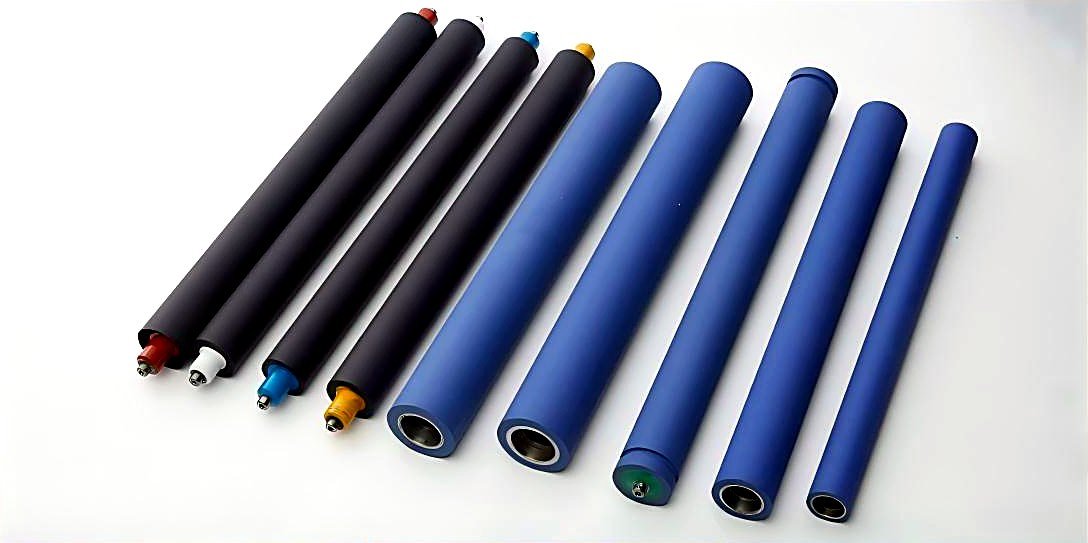
Five Roller Families, One Production Line
Every roller starts from a drawing, a machine model, or a worn part. Single pieces and full press sets go through the same process.
Rubber Rollers
NBR, EPDM, SBR, neoprene. 20–95 Shore A, hot vulcanised.
Printing Rollers
Ink, dampening, rider rollers for Heidelberg, Roland, Komori, KBA.
Steel & Chrome
Ground, balanced steel rollers. Hard chrome 20–100 micron.
Silicone & PU
Heat resistant to 250 °C. Cast PU 60A–70D for high load.
Conveyor Rollers
Gravity and driven rollers, lagged and knurled drive rollers.
Most Requested Roller Types
These eight cover the majority of enquiries we receive. If your roller is not listed, send the drawing — most specials are variations of these.
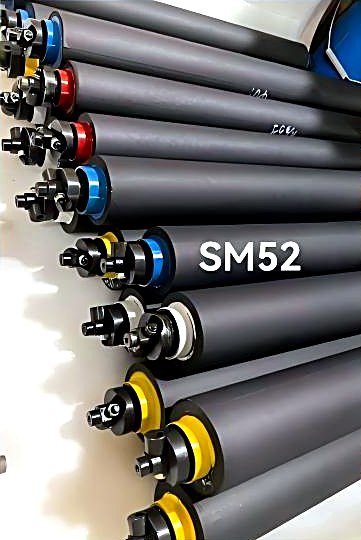
Printing Roller
Ink, dampening and rider rollers, hardness matched to each press position.
View specification →to be supplied
Rubber Roller
NBR, EPDM, SBR and neoprene covers, hot vulcanised to the core.
View specification →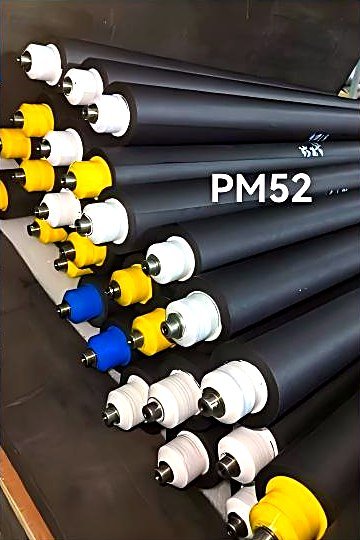
Speedmaster 52 Set
Full replacement sets for Heidelberg 52 series, shipped as a matched unit.
View specification →to be supplied
Polyurethane Roller
Cast PU with high load capacity and cut resistance for demanding nips.
View specification →to be supplied
Steel Roller
Carbon steel and stainless steel rollers machined to drawing.
View specification →to be supplied
Silicone Roller
Heat resistant non-stick rollers for hot nip and laminating lines.
View specification →to be supplied
Conveyor Roller
Steel, PVC and rubber covered rollers for parcel and production lines.
View specification →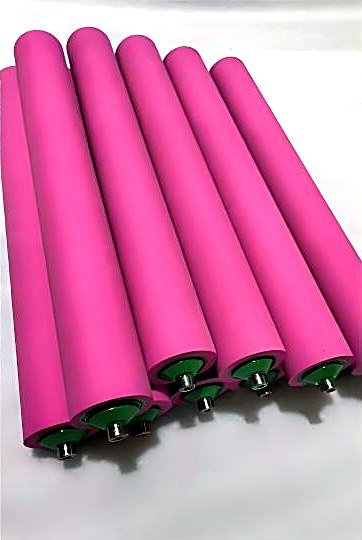
Special Compounds
Colour-coded covers so line staff can identify roller positions at a glance.
View specification →What You Get Beyond the Roller
Own Factory
5,000 m² workshop with covering, vulcanising and grinding in house. Not a trading desk.
Hardness Tested
Every batch checked with a durometer and recorded on the inspection sheet.
Tolerances Agreed
Runout, concentricity and finish confirmed in writing before production starts.
Direct Engineer
The person who reads your drawing is the person who answers your email.
Which Compound for Which Job
Choosing a compound is not about picking the hardest rubber. It is about matching the compound to what degrades it on your line.
| Material | Hardness | Temperature | Typical use |
|---|---|---|---|
| NBR (nitrile) | 30–90 Shore A | up to 100 °C | Nip and feed rollers, resistance to oils and greases |
| EPDM | 40–90 Shore A | up to 120 °C | Outdoor, water, steam and ozone exposure |
| SBR | 40–90 Shore A | up to 80 °C | General purpose, cost-sensitive applications |
| Neoprene (CR) | 40–85 Shore A | up to 110 °C | Moderate oil and weather resistance |
| Silicone | 30–80 Shore A | up to 250 °C | Hot nip, film laminating, non-stick surfaces |
| Polyurethane (PU) | 60 A – 70 D | up to 80 °C | High load, abrasion and cut resistance |
Hardness ranges are typical values. Final specification is confirmed against the factory’s tested capability before quotation.
Technical Notes for Buyers
Short, practical answers to the questions that come up before and after an order.
How to Choose Roller Hardness
Shore A ranges mapped to nip width, contact pressure and wear life — and the mistake most buyers make when replacing a roller.
Read more →Rubber vs Polyurethane Roller
Load capacity, abrasion, oil resistance and cost compared — with the applications where each one fails.
Read more →Roller Runout Tolerance
What printers and converters should accept on arrival, how to measure it, and when to reject a delivery.
Read more →Send the Drawing. Get a Number Back.
Email your drawing or machine model. You will get a material proposal, a price and a lead time — usually within one working day.